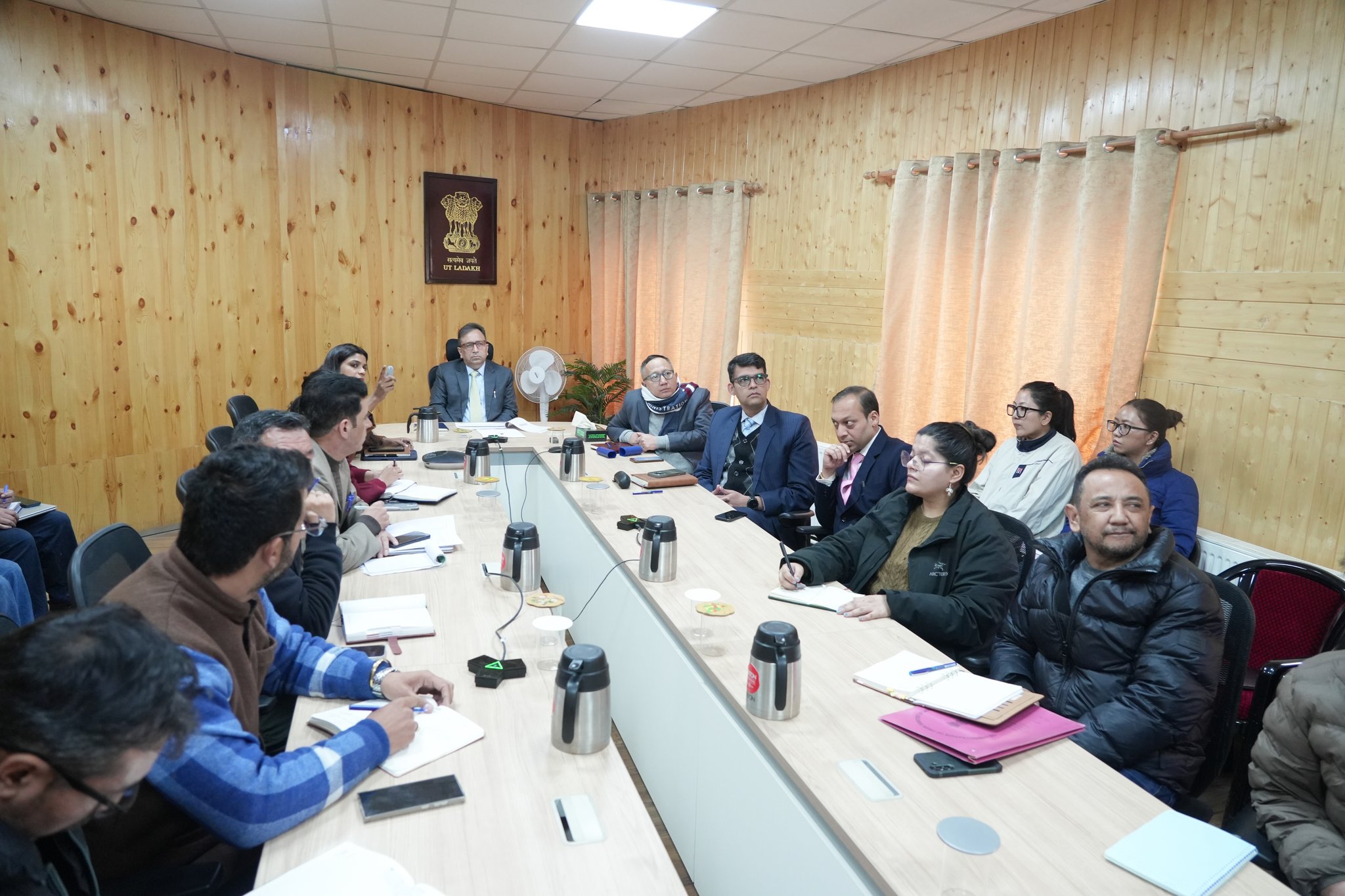
The Chief Secretary of the Union Territory of Ladakh, Ashish Kundra, chaired a high-level meeting in Leh to review the key outcomes of the Ladakh Pashmina Conclave 2026 and discuss strategies to strengthen the region’s Pashmina value chain.
The meeting focused on improving the production ecosystem, ensuring fair returns for producers, and enhancing livelihoods for pastoral communities dependent on Pashmina.
Presentation Highlights Challenges and Roadmap
During the meeting, Shashanka Ala delivered a detailed presentation on the current status of the Pashmina sector.
The presentation covered:
- Mapping of key stakeholders in the Pashmina value chain
- Identification of six structural challenges affecting the sector
- Key discussions and recommendations from the conclave
- Findings from independent experts and fibre quality studies conducted by OFDA
It also outlined department-wise action points and a roadmap aimed at strengthening the sector.
90-Day Action Plan and Three-Year Vision
Officials presented a plan identifying top priorities for the next 90 days, along with key policy decisions required to improve the sector.
The roadmap also proposed a three-year vision for the Pashmina industry in Ladakh, focusing on coordinated action across government departments to ensure:
- Sustainable sector growth
- Improved fibre quality standards
- Better livelihoods for pastoral communities
Floor Price for Pashmina Fibre Proposed
Reviewing the outcomes, Chief Secretary Ashish Kundra stressed the need to notify a floor price for Pashmina fibre to ensure fair compensation for producers and regulate buyers in the market.
He also emphasized the importance of reducing unnecessary intermediaries and promoting direct transactions between producers and buyers, supported by a scientific market assessment to develop a rational pricing mechanism.
Modernisation of Processing and Digital Livestock Database
Kundra also highlighted the need to modernise the traditional dehairing process, which is a critical step in Pashmina fibre processing.
He directed officials to create a digital database of sheep and livestock, capturing production details and current status to support better planning and policymaking.
The Chief Secretary also stressed strengthening cooperative institutions and establishing a structured end-to-end system across the Pashmina value chain.
Adoption of Global Best Practices
To improve competitiveness, Kundra directed departments to study global Pashmina processing methods and adopt suitable technologies for Ladakh.
He also called for the identification and training of skilled yarn makers, including bringing expertise from outside Ladakh if necessary, to enhance the quality and global competitiveness of Ladakhi Pashmina.
Implementation in Project Mode
To ensure effective execution, the Chief Secretary instructed officials to implement the initiative in project mode, with the appointment of a nodal officer and a dedicated team responsible for monitoring and executing the action plan.
Focus on Expanding Pashmina Production
During the meeting, Kundra also interacted with officials from the Sheep Husbandry Department, Ladakh to explore opportunities to scale up Pashmina production.
Discussions covered:
- Breeding practices
- Farming capacity
- Expanding livestock-based livelihoods in the region
Senior Officials Attend Review Meeting
The meeting was attended by several senior officials including:
- Laltinkhuma Franklin
- Bhupesh Chaudhary
- Bhanu Prabha
- Mandeep Mittal
- Ashraf Bhat
Officials from the Sheep Husbandry Department and other concerned departments also participated in the review meeting.
The discussion highlighted the administration’s commitment to strengthening Ladakh’s Pashmina industry and improving the economic prospects of pastoral communities in the region.